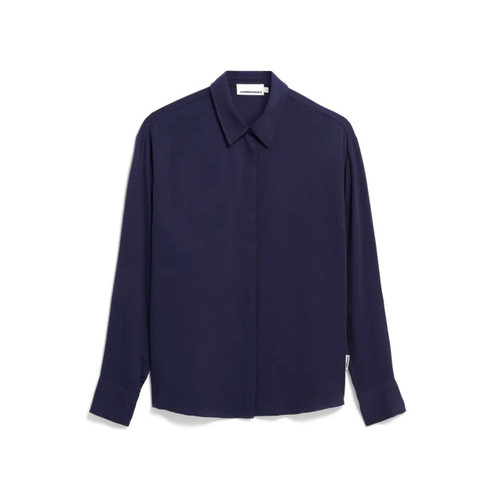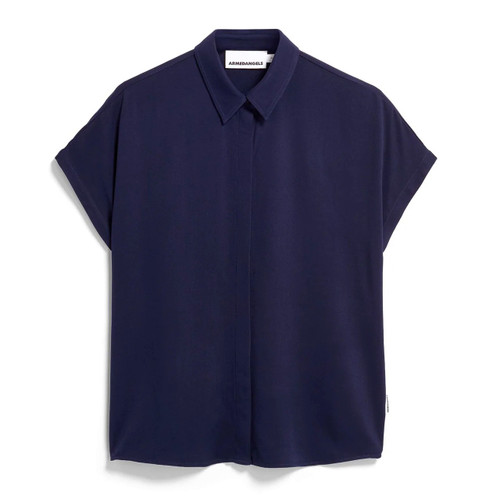


Slim fit, long sleeved top with a boat neck and is ideal for layering designed by ethical, eco-conscious Cologne based label, Armed Angels.
Ethically made in Portugal from 100% GOTS certifled organic cotton
Why choose organic cotton?
Long-term studies of organic farms have shown that organic cotton production emits 18 percent less global warming potential than other farming systems. Additionally, as organic farming is designed with the soil health and biodiversity in mind, the organic soils tend to be healthier and more resistant to changing climate.*
Regular cotton is a very pesticide dependent crop but organic fibres are grown without the use of harmful pesticides or genetically modified organisms so promote a healthier environment for wildlife, animals and people. Less water is used in the production of organic cotton & social conditions are high in organic textile factories so this cotton production can help farmers find a way out of poverty.
Organic textiles don't contain allergenic, carcinogenic or toxic chemicals and as a result are a natural, renewable and biodegradable fibre.
*Source: Textile Exchange, 2021
Why Choose Tencel? Tencel® is the brand name for Lyocell which is a man-made cellulosic fabric made from wood pulp. It is produced in a closed-loop system, which means that 99% of the solvent as well as water is reused. It is obtained from trees that are grown on farms, eliminating the risk of deforestation. 99% of the wood comes from FSC and PEFC certified and sustainably managed forests. FSC and PEFC are non-profit, independent organisations working towards a long-term sustainable and viable use of the world’s forests. More than 50% of the wood is from Austrian and other European forests. To extract the fibre from the wood, a biodegradable chemical is used, resulting in a viscous cellulose pulp. To convert into long fibres, the mass must be pressed through a large nozzle. Then, the fibres are dried, washed, spun into threads, and lastly woven into a textile material.